
Development
claude-copy
Copy any reference pixel perfect in mintes

Plugin Signal65/100Solid
maintained76
capable48
documented100
adopted27
Install on Claude Code
Auto-invoked ships a router so the right skill fires automatically as you prompt. No remembering which skill to call.
Normal is the plain upstream plugin, installed as-is. You invoke its skills yourself.
The plugin> /plugin marketplace add HarKro753/claude-copy> /plugin install clone@clone-marketplaceAuto-invocation> /plugin marketplace add flowy-sh/flowy-core> /plugin install flowy-core> /plugin install flowy-clone
What's inside
Skill(9 skills)
/chrome-developmentExpert guidelines for Chrome extension development with Manifest V3, covering security, performance, and best practices. Use when building browser extensions, creating popup UIs, implementing content scripts, working with Chrome APIs, managing extension permissions, or/htmlClone a captured website into pixel-verified static HTML — a capture session (pages.json plus one folder per page holding ref.png, source.html, computed.json, meta.json) becomes one page.html per route, sharing a shell, a stylesheet, a glyph set and a token scale, where every/imageRecreate a single flat image as one self-contained HTML page, verified by rendering it and comparing to the image — no capture, no DOM, no HTML input. Use when the user hands you just a picture (a screenshot, a poster, an Instagram/carousel slide, a graphic, a UI mock) and wants
README
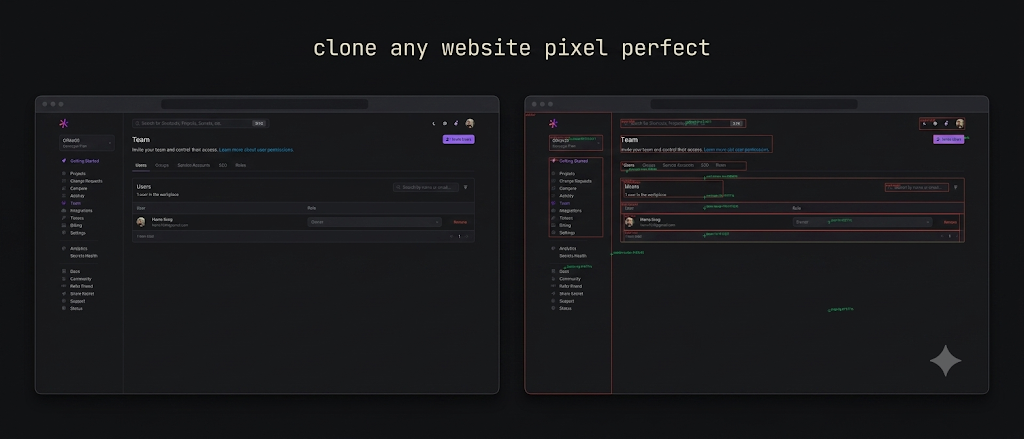
Rebuild any interface — then prove the rebuild is right, one pixel at a time.
Every tool in this category claims pixel-perfect. clone is the one that checks.
A Chrome extension captures a live site's screenshot, DOM, and computed styles. A Claude Code plugin rebuilds the page from that capture, renders its own output back into headless Chromium, and diffs it against the original screenshot. Every region gets a score. Nothing is finished until every score clears its floor.
See the measurements → · Read a teardown →
📊 Six products, graded
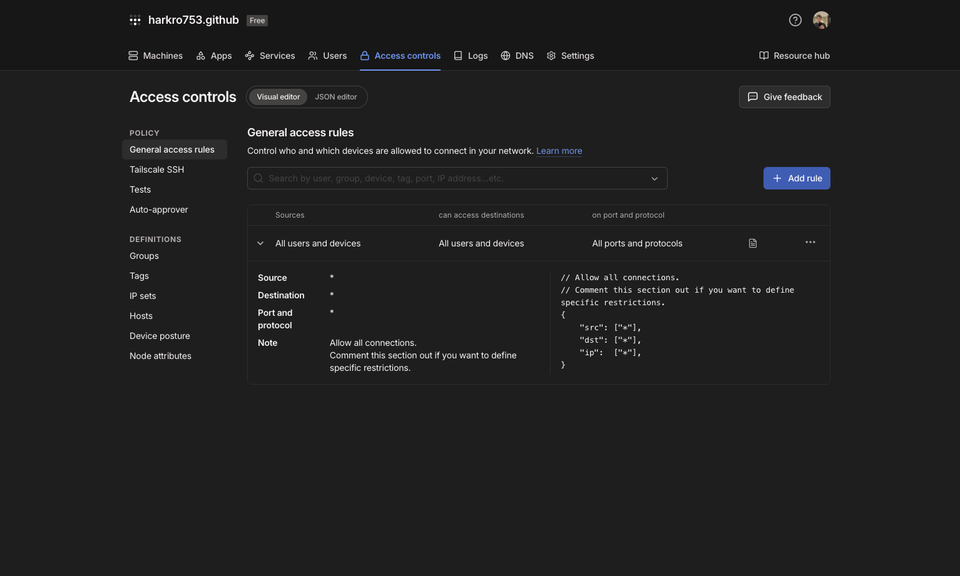
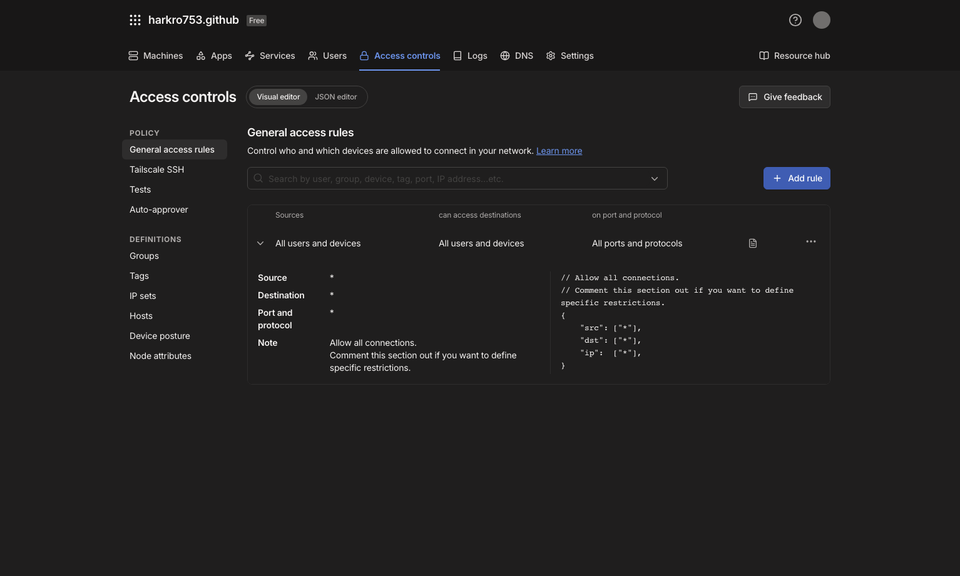
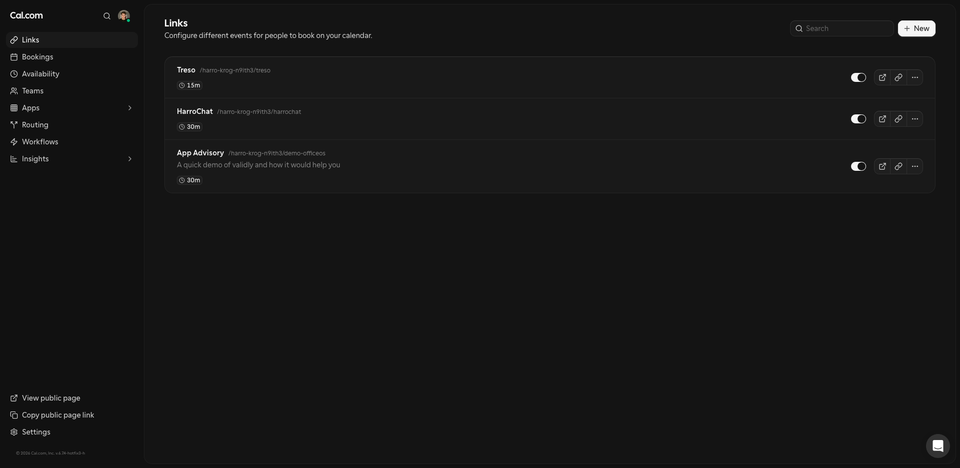
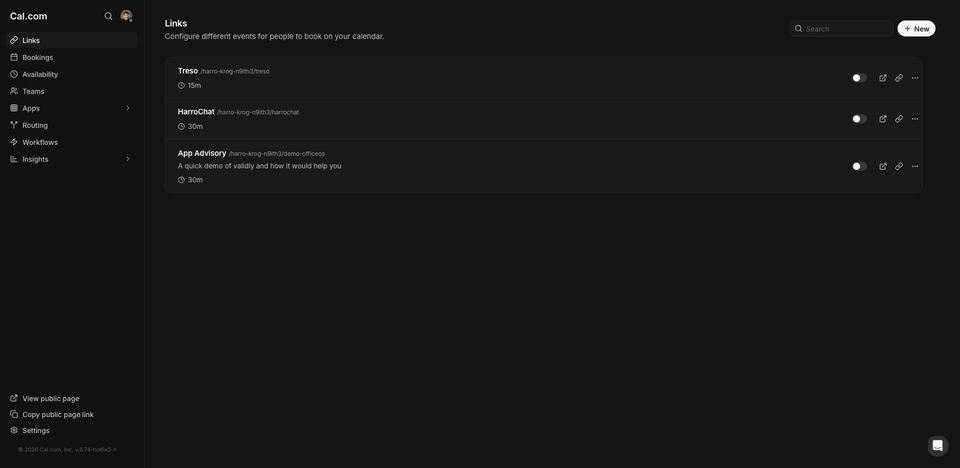
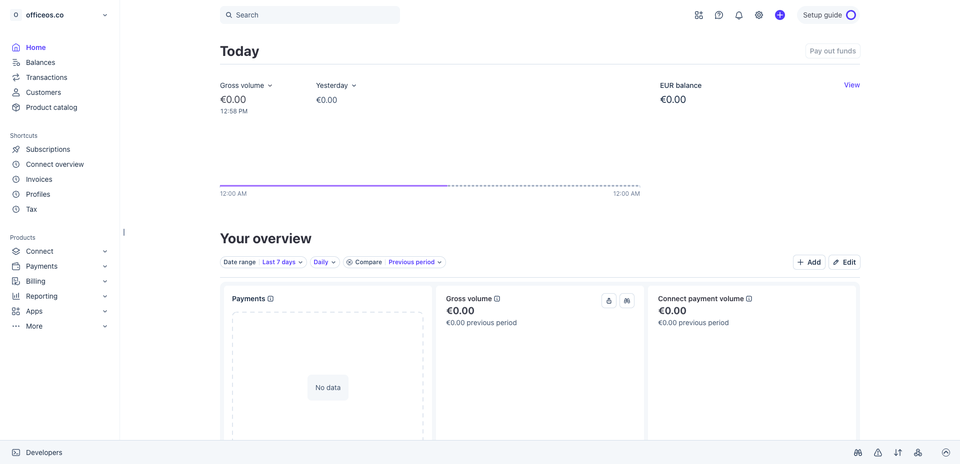
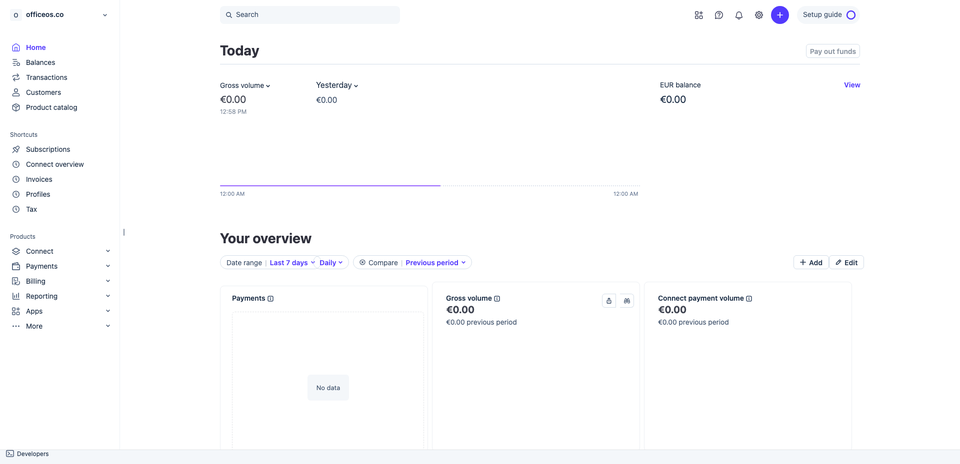
Each row is a live production page, rebuilt from scratch and diffed against its own reference at the same size and device pixel ratio. exact is the share of pixels identical to the original on all three channels, with no tolerance whatsoever.
| Capture | Frame | Pixels exact | Within 8/255 | Mean Δ | |
|---|---|---|---|---|---|
| Doppler — Team settings | 1920×937 | 97.69% | 98.05% | 1.27 | Teardown |
| Tailscale — Access rules | 1534×921 | 97.58% | 98.80% | 0.65 | |
| Cal.com — Bookings | 1921×937 | 94.67% | 97.88% | 1.41 | |
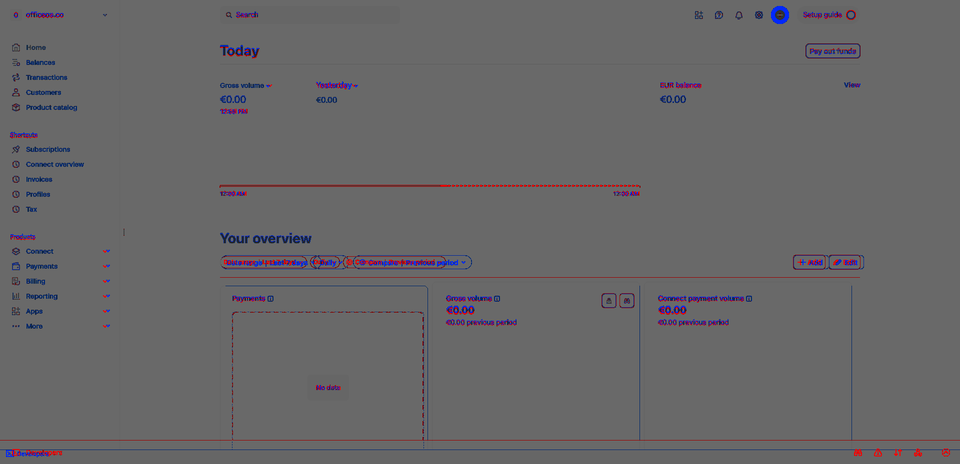
| Stripe — Dashboard | 1920×929 | 94.45% | 94.86% | 1.70 | |
| Cloudflare — Dashboard | 1920×929 | 91.88% | 95.46% | 3.87 |
Doppler and Tailscale sit near 97.6% because token-driven product surfaces are exactly what the pipeline is built for. Cloudflare is the floor of the set, and the gap is almost entirely antialiasing along small-glyph edges plus the image content every rebuild deliberately replaces with neutral placeholders — a part that can never reach 100% by design, which is why the within-8 column is the more useful read on dense screens.
Doppler — Team settings · 97.69% exact
| Original | Clone | Pixel diff |
|---|---|---|
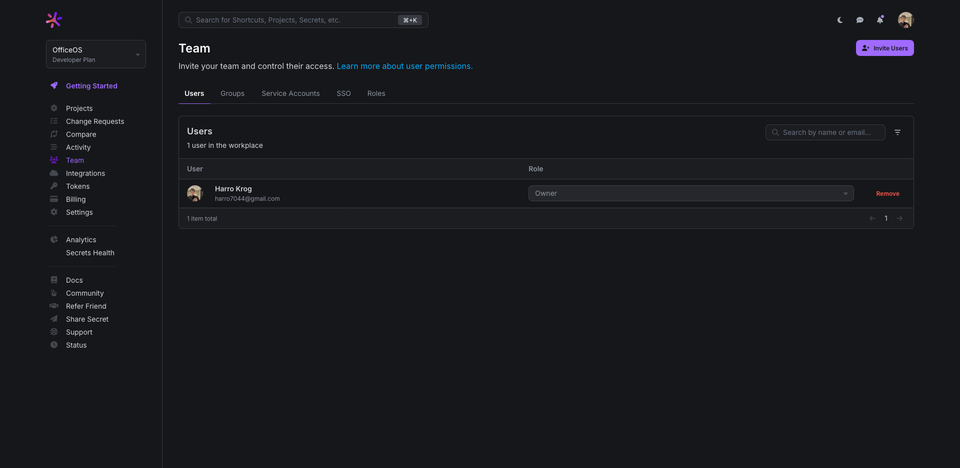 | 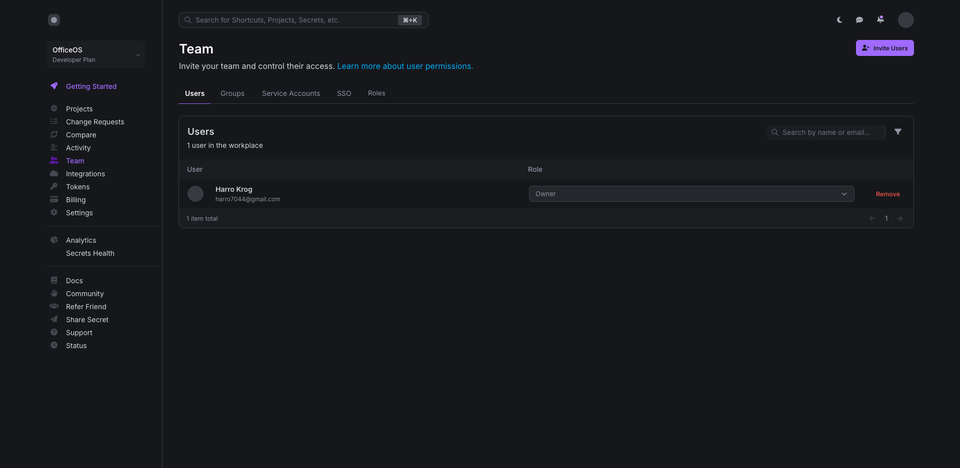 | 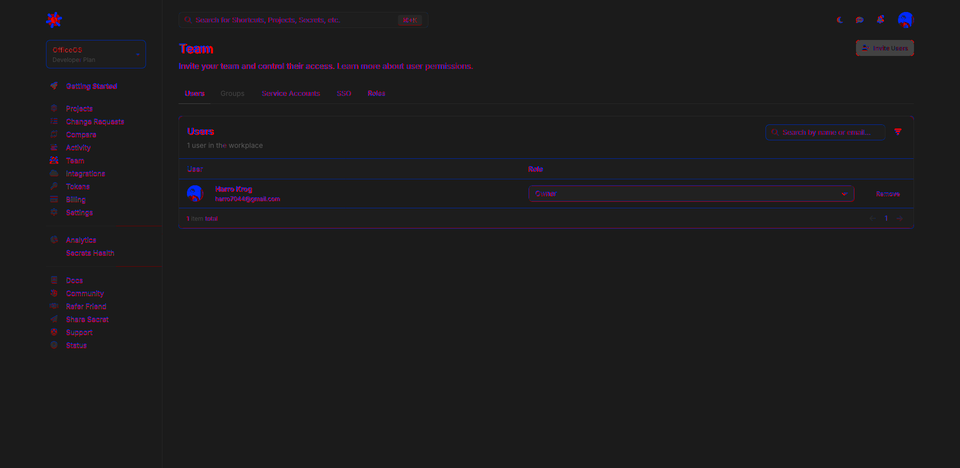 |
Written up in full: Doppler's team settings page, measured to the pixel — an eleven-value grey ramp, a radius ladder tied to element size, and an accent color used exactly four times.
Tailscale — Access rules · 97.58% exact
| Original | Clone |
|---|---|
 |  |
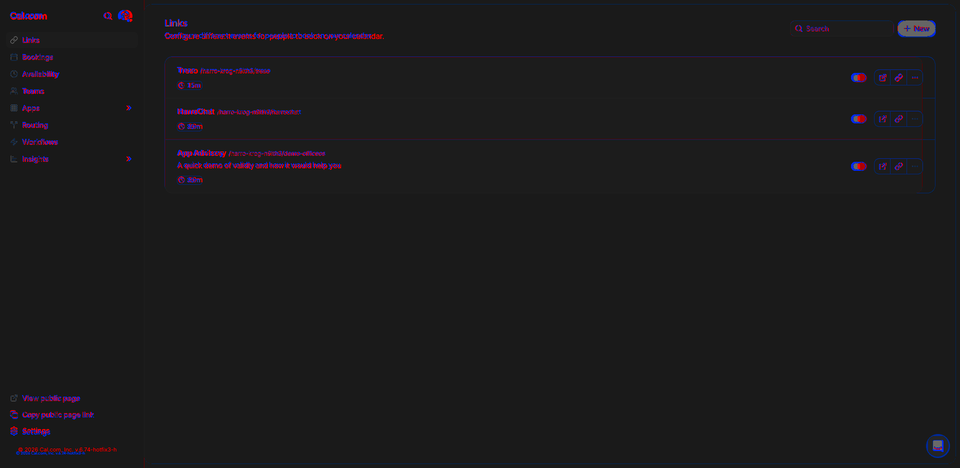
Cal.com — Bookings · 94.67% exact
| Original | Clone | Pixel diff |
|---|---|---|
 |  |  |
Stripe — Dashboard · 94.45% exact
| Original | Clone | Pixel diff |
|---|---|---|
 |  |  |
Cloudflare — Dashboard · 91.88% exact
| Original | Clone | Pixel diff |
|---|---|---|
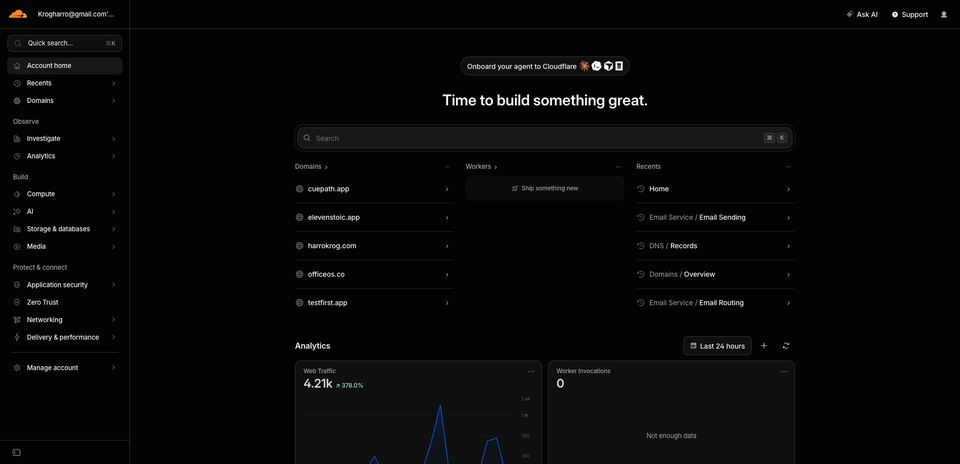 | 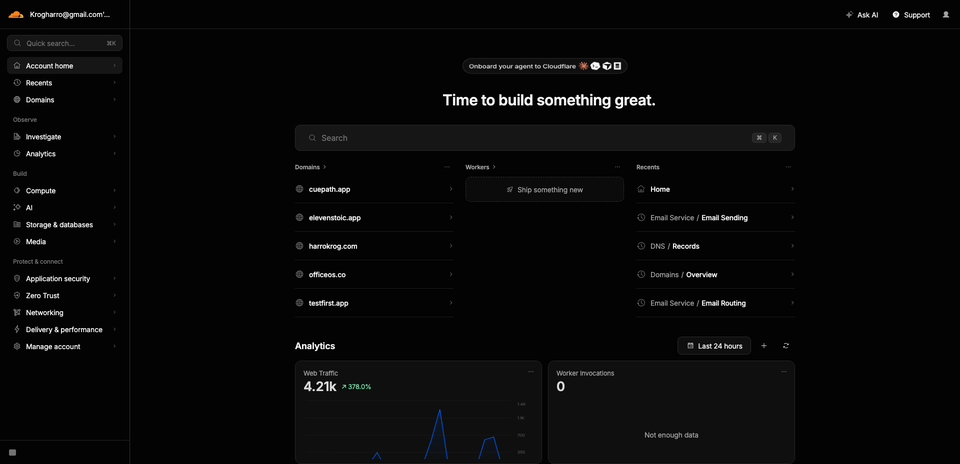 | 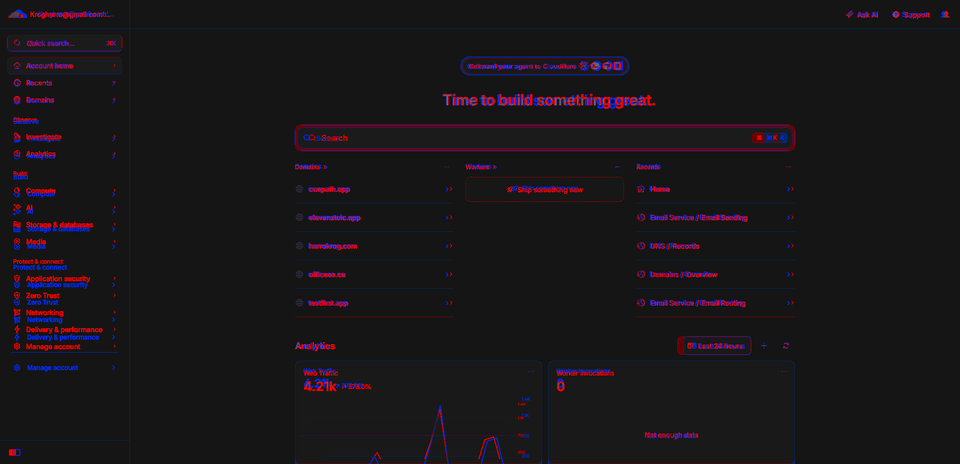 |
In every diff, dark means agreement. Color appears only where the clone and the original disagree — chiefly the brand marks and photographic content the pipeline deliberately refuses to reproduce.
🌟 What makes it different
- A real oracle, not eyeballing. The clone renders in headless Chromium at the capture's exact DPR, is cropped to the reference's exact size, and is diffed per pixel. The oracle is plain Python — PIL and Playwright, no model in it — so it cannot be talked out of a failing score.
- Two targets, one engine.
/clone:htmlemits a staticpage.html./clone:reactemits shadcn/ui components with the site's captured states (hover, focus, dialogs) as real props. Same measurement code underneath. - Causes, not symptoms. A 3px sidebar offset that breaks 200 boxes reports as one upstream cause. You fix the sidebar, not the two hundred things downstream of it.
- Behaviour a screenshot can't hold. The React target inherits command palettes, focus traps, and keyboard navigation from Radix.
- Honest by construction. Fonts are self-hosted and gated — a fallback font fails the run. Icons ship as verified files. Brand marks are dropped and photos become neutral placeholders, and neither is ever asserted against.
ℹ️ Why measure at all
Ask an agent to copy a UI and it will invent a 13px gap, pick a grey that's two steps off, and tell you it's done. The fix isn't a better prompt — it's removing the agent's opinion from the acceptance decision.
So the capture is treated as ground truth (a real PNG bitmap plus the computed styles that produced it), and the rebuild is graded against it every cycle until it passes. Drift stops being a matter of taste and becomes a number that either clears the floor or doesn't.
What you keep afterwards is not the clone. Nobody should ship one — it has no data, no responsive behaviour, and no reason to exist. What survives is the layer above it: the real token ramp, the type scale, the elevation model, the exact grey that reads as a border instead of a line. That's the part a team takes years to converge on, and the part a generative tool approximates badly and confidently. Wiring a database to a table component was never the hard bit.
How it works
graph LR
    A[Chrome extension] -->|ref.png · DOM · computed styles| B[capture folder]
    B --> C[prep · extract · resolve · cluster]
    C --> D[author page.html / .tsx]
    D --> E[check: render → diff → score]
    E -->|failing boxes| D
    E -->|0 failing| F[verified clone]
- Capture — the extension takes a full-page screenshot (one shot via CDP device-metrics override, never stitched) plus a recursive tree of every node's rect, text, ~50 computed style properties, and its
:hover/:focusstates. - Prep / extract / resolve / cluster — validate the capture, derive a shared design system (
base.css, tokens, self-hosted fonts, open-source icon glyphs), and cluster repeated subtrees into components. - Author — build one route by hand from the extracted
layout.md. The only step where anything is guessed. - Check — render, diff, score every box. Anything below its floor goes back to step 3.
Full architecture: docs/CODEBASE_MAP.md · pipeline design rationale: docs/PIPELINE_GRAPH.md.
📦 Install
clone is a Claude Code plugin. Install it from this repo's marketplace:
/plugin marketplace add HarKro753/claude-copy
/plugin install clone@clone-marketplace
Enabling the plugin puts the clone CLI on your Bash PATH and loads the /clone:html and /clone:react skills. See Requirements for the Python, Node, and Chrome pieces.
Capture extension
The capture side is a Chrome MV3 extension in capture-extension/, loaded unpacked — no Web Store, no account:
- Open
chrome://extensions. - Toggle Developer mode (top right).
- Load unpacked → select the
capture-extension/folder.
The copy-website capture action then appears in your toolbar and writes a capture folder that clone prep consumes.
🚀 Usage
clone prep <session> --target html|react   # target recorded in routes.json
clone extract                              # layout.md, tree.json, shared/*
clone resolve                              # fetch/recolor open-source icon glyphs
clone cluster                              # detect repeated components
clone init | map | build                   # react target only
clone check [route]                        # render → diff → score, loop until 0 failing
Static HTML is one line per phase. React adds init (scaffold + theme), map (a shadcn component per node), and build (vite → self-contained page.html).
A web app is not one capture — it's one capture per screen. Capture the dashboard, then billing, then settings; each becomes its own verified route, and the shared design system is derived across all of them so the routes agree with each other instead of drifting apart.
❓ Known limits
Worth knowing before you install, rather than after:
- No responsive output. A capture is one viewport and the clone is verified at that one resolution. Original breakpoints are not recovered. Capturing the same route at three widths and scoring all three in parallel is the obvious fix and isn't built yet.
- No functionality. No backend, no data, no business logic. The HTML target preserves hover and focus and nothing else; the React target adds Radix behaviour on top of screens that are still static.
- Not a migration tool. It rebuilds from a rendered page and its computed styles, so it knows nothing about the source framework and reproduces none of its logic.
- The check loop is slow. By design — it re-renders and re-scores every cycle. Making that cheaper without making it more forgiving is the most valuable open problem in the repo.
⬇️ Requirements
- Python 3 with PIL and Playwright (Chromium) on the system
python3— the oracle. - Node + a package manager for the React target (React + Vite + Tailwind v4 + shadcn/ui).
- Chrome — load
capture-extension/as an unpacked Manifest V3 extension. - Claude Code with the
cloneplugin enabled.
🗂️ Structure
assets/               README banner + the measured gallery (original · render · diff)
example/              a live static clone (render.html + its fonts/css/svg)
capture-extension/    Chrome MV3 capture tool
skills/clone/         the pipeline plugin (engine/ + html & react targets)
docs/                 CODEBASE_MAP.md · PIPELINE_GRAPH.md
🛠️ Development
The engine is skills/clone/engine/ — one module per concern, with both artifacts behind a shared Target interface, so adding a third is one file in targets/, not a fork. After touching the engine, run all four test files:
cd skills/clone/tests
python3 -m pytest test_engine.py test_react.py test_hook.py test_e2e.py
📚 Teardowns
Rebuilding a page to within a pixel means reading every decision its designers made. Those readings are written up at officeos.co/teardowns — type ramps, spacing grids, the exact border greys, and why each choice does what it does, all sourced from values that had to be right for the diff to pass.
⚠️ Disclaimer
The products above are used purely as technical subjects for measurement and design analysis. This project is not affiliated with, endorsed by, or sponsored by any of them; all trademarks and brand marks belong to their respective owners. Brand marks are dropped from every rebuild, photographic content is replaced with neutral placeholders, and clones are rendered locally for measurement only — never deployed or served as live sites.
📄 License
MIT © Harro Krog. See CONTRIBUTING, Code of Conduct, and Security Policy.
Built by OfficeOS — we design, build, launch and operate subscription apps for creators, and are paid only from what they earn.
File tree
FAQ
claude-copy is a Claude Code plugin of 9 hand-picked skills with a FLOW.md router. Install it once and the right skill fires as you prompt, with no slash command to remember. It is built for development work. It includes chrome-development, html, image. Free and open source.
- What is claude-copy?
- Copy any reference pixel perfect in mintes
- How do I install claude-copy?
- Run these in Claude Code: /plugin marketplace add HarKro753/claude-copy then /plugin install clone@clone-marketplace. Then prompt normally.
- Does claude-copy auto-invoke its skills?
- Yes. It ships a FLOW.md router that Flowy's hook fires, so the matching skill runs as you prompt. You never name a skill.
- Is claude-copy free?
- Yes. Flowy is free and open source, with nothing gated. You can read every skill in full before you install.
Is this plugin yours?
Claim it with GitHubSubmit a pluginPromote it