

cmem
MCPShips with claude-mem: Persistent Context Across Sessions for Every Agent – Captures everything your agent does during sessions,…
 @thedotmackInstall MCP
Ships with evolving-agents: The director remembers how your team works — and makes every agent session work that way. Your decisions, conventions and hard-won methods become a small memory of linked rules.
Claude Code
> /plugin marketplace add EvolvingAgentsLabs/evolving-agents> /plugin install director@evolvingagentslabs
Codex
$ git clone https://github.com/EvolvingAgentsLabs/evolving-agents
Clone the repository
Cursor
$ git clone https://github.com/EvolvingAgentsLabs/evolving-agents
Clone the repository
Gemini CLI
$ git clone https://github.com/EvolvingAgentsLabs/evolving-agents
Clone the repository
GitHub Copilot
$ git clone https://github.com/EvolvingAgentsLabs/evolving-agents
Clone the repository
OpenCode
$ git clone https://github.com/EvolvingAgentsLabs/evolving-agents
Clone the repository
Windsurf
$ git clone https://github.com/EvolvingAgentsLabs/evolving-agents
Clone the repository
Security report
Not enough data
Known flaws
Not published
Signed build
Not published
Maintained
Nov 6, 2026
Last push
Licence
Apache-2.0
Runs as
Local process
On your machine
Deprecated
Not published
Signals from public registries, not an audit. Checked Nov 15, 2026.
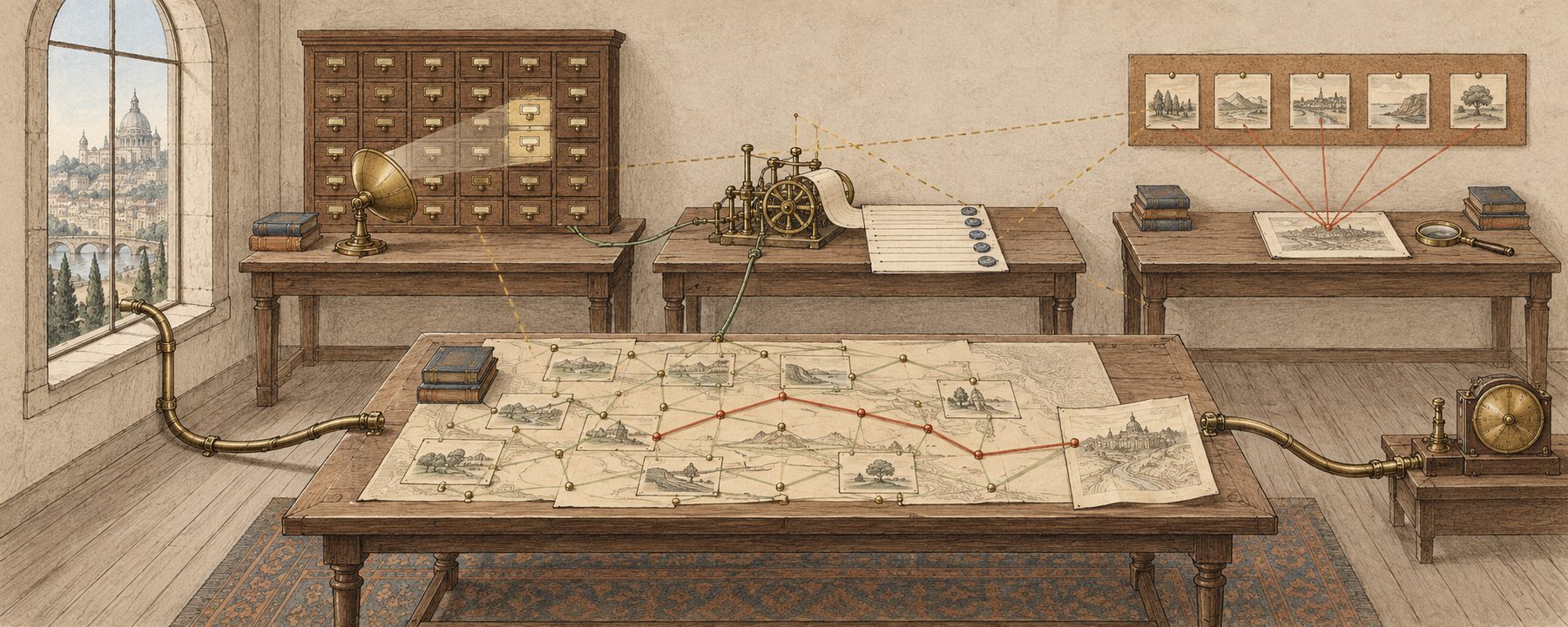
The director remembers how your team works — and makes every agent session work that way.
Your decisions, conventions and hard-won methods become a small memory of linked rules. Before an agent plans, the director finds the rules that apply and puts them in front of it. Private work goes only to machines you have cleared. When you correct it, it drafts a lesson that you accept or reject. It runs inside Claude Code today.


Contents — What it does · Who it is for · What to expect · Get started · What comes next · How it works, and what we measured · Earlier work

| Carries your team's decisions into the work | The agent does not guess which definition, threshold or convention your team chose. The director hands it the one you decided, at the step where it matters, and the plan says which rule it followed. |
| Learns from your corrections — only with your yes | Correct it once and it drafts the lesson, checks it against what it already knows, and keeps it only if you accept. Every lesson is a change you can read, compare and undo. |
| Keeps private work private | Mark a task confidential and it can only go to a machine you have cleared — a local model, a server in your office — never to a cloud model. That rule is enforced in code, not asked of the model. |
| Sends each task where it belongs | A frontier model, a model on your own machine, or another tool. Move a task once and it plans the next one like it the same way. |
| Shows what it decided, and what it could not | Every plan lists the rules it followed and, separately, the choices your memory does not cover yet — the decisions that are still yours. |
CLAUDE.md, an AGENTS.md or Claude Code's memory that the agent
still forgets under pressure.The director does not make a strong model smarter. With today's best models, an agent already follows general good practice on its own — we measured that, and say so. Where the director pays is what the model cannot know: your team's own decisions and conventions, your privacy rules, the methods you learned the hard way, and a record of every lesson that you can audit. Every claim on this page has a measurement behind it, including the ones that came back flat: how it works, and what we measured.
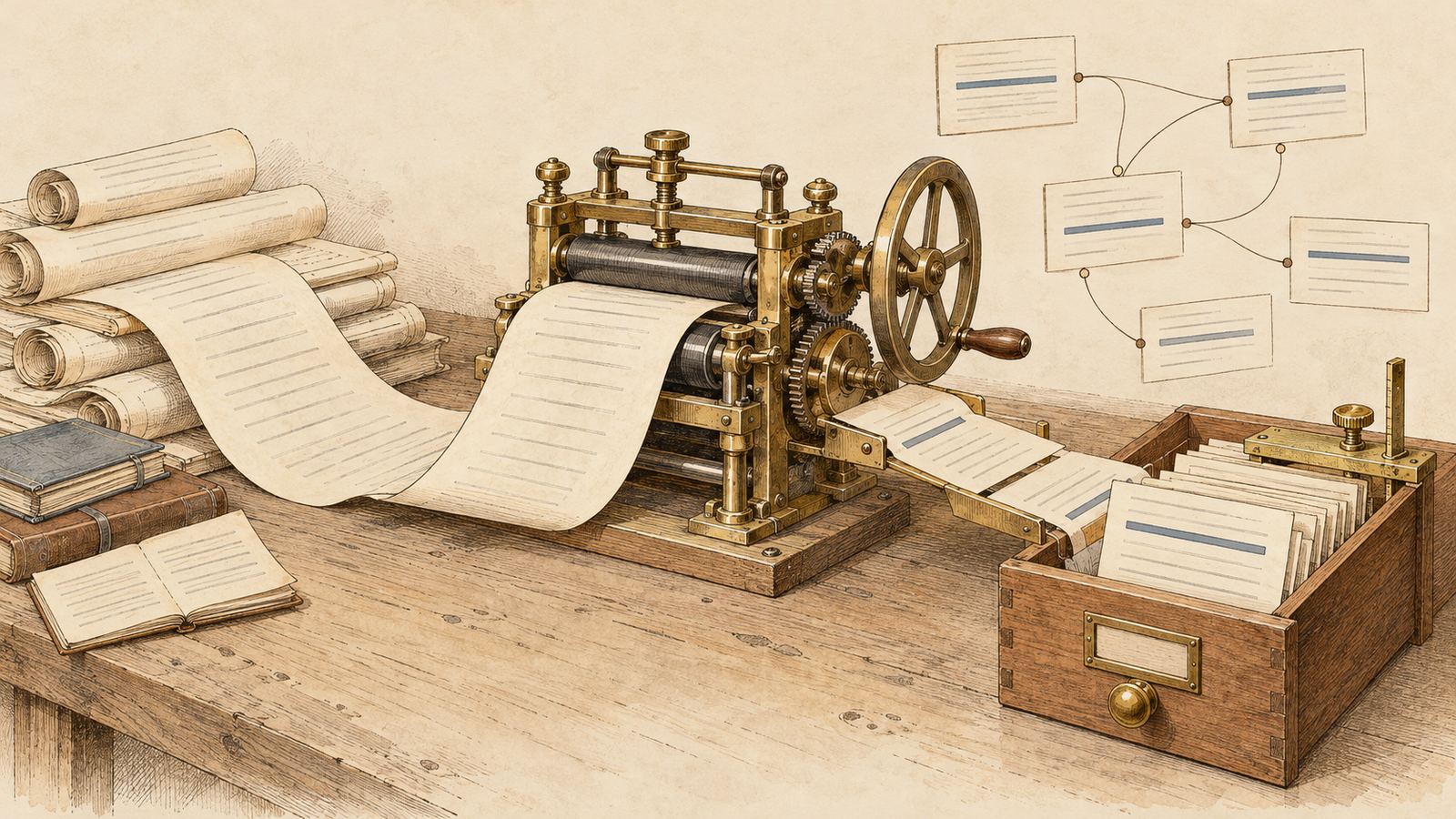
Inside Claude Code:
/plugin install director --marketplace EvolvingAgentsLabs/evolving-agents
/director:compile        # your CLAUDE.md, AGENTS.md and memory → linked rules (asks first; ~US$5 for ~60 files)
/director:reflect        # after a task: your correction becomes a proposed lesson, kept only on your yes
From the next session on, every plan walks your memory and cites what it follows. A band above the prompt shows each
proposed lesson with Diff, Accept and Reject, and each delegated task until its result is back. The
memory stays on your machine as plain Markdown. Requirements, the two-lane local interface, running without a person
present, and costs: packages/director/.
Three questions, in order, each judged by a measurement named before it runs (ROADMAP.md): does an agent get better from one session to the next on the work you repeat, without the memory ever making it worse (director-bench); can the director improve its own components, not only its memory — the promise of the name Evolving Agents; and can the same memory run on other agent platforms (Anthropic's Managed Agents, Google's Antigravity agent).
Built with, from the same lab: lora-kernel — small specialist models that run on your own machine · agentvcs — every lesson the director keeps is a versioned change you can compare and undo · gene-evidence — reports in which every sentence cites its evidence. All projects: evolvingagentslabs.github.io.
packages/director/ | Active — the project. The director and its Claude Code plugin |
legacy/eat/ | The Evolving Agents Toolkit, 2025, the director's ancestor. Kept readable; its 2025 README is docs/README-EAT-2025.md |
plugin/ | Paused. A Claude Agent SDK plugin that versions an agent's evolution (commit, diff, merge, freeze on a passing eval). Its ideas continued in agentvcs; merging two forked sessions (M1) never started |
ai-os/ | Paused since 2026-09-06. An agent-based operating system on the qm base, kept as a subtree |
packages/memory/ | Structured recall above Claude Code's flat memory files. Works; measures no better than naive matching (PLAN.md) |
packages/agentvcs/ | Frozen copy. agentvcs lives in EvolvingAgentsLabs/agentvcs |
demos/robot/ | A 2D robot that evolves its own skills, versioned with agentvcs |
What the 2025 toolkit taught us — three flat results
EAT was not a product that failed; it was an architecture written down and never pinned to anything that could contradict it. 10,165 of its lines were deleted where the Agent SDK does the same better — docs/WHAT-WAS-DELETED.md lists each one and what replaced it. Rebuilt and measured since:
cosine = 0.753) and buys nothing on a modern encoder.SmartMemory and ContextBuilderTool,
measured three times: −4, +0 (p = 1.0000) and −6 against retrievers up to an oracle. What did move was
a compact statement of a rule induced from the same trajectories: +21 over the oracle — which is what the
director's memory is made of.It was right about where to look and wrong about what would be there. That is why it is in legacy/, not deleted.
Breaking change: pip install no longer installs evolving_agents
This is a monorepo now; install what you want by name. The 2025 package sits at legacy/eat/ with its original
setup.py, unchanged. agentvcs was never published to PyPI; the frozen copy installs from source:
pip install "git+https://github.com/EvolvingAgentsLabs/evolving-agents#subdirectory=packages/agentvcs"
The maintained agentvcs is EvolvingAgentsLabs/agentvcs.
By Matias Molinas and Ismael Faro · Apache 2.0

Stars on GitHub
Ships with claude-mem: Persistent Context Across Sessions for Every Agent – Captures everything your agent does during sessions,…
@thedotmackInstall MCPShips with mempalace: Local-first AI memory. Verbatim storage, pluggable backend, 96.6% R@5 raw on LongMemEval — zero API calls.
 @mempalaceInstall MCP
Ships with mempalace: Local-first AI memory. Verbatim storage, pluggable backend, 96.6% R@5 raw on LongMemEval — zero API calls.
 @milla-jovovichInstall MCP
Ships with ai-memory: Solution for long term memory for agent coding CLIs and to facilitate handoff between different agent…
 @akitaonrailsInstall MCP