
Design
Plugin
editor
An open-source, local-first 3D building editor built with React Three Fiber and WebGPU. Run it in the browser or from the CLI, and connect AI agents through MCP.

Plugin Signal74/100Solid
maintained100
capable34
documented75
adopted93
Install on Claude Code
> /plugin marketplace add pascalorg/editor> /plugin install pascal-agent-skills@pascal
Stats
24,712
Stars
3,054
Forks
Active
Maintenance
TypeScript
Language
MIT
License
1m ago
Last commit
11mo ago
Created
5h ago
Added
Repo: pascalorg/editor
What's inside
Skill(2 skills)
MCP(2 mcp)
README
Pascal Editor
An open-source, local-first 3D building editor built with React Three Fiber and WebGPU. Run it in the browser or from the CLI, and connect AI agents through MCP.






https://github.com/user-attachments/assets/8b50e7cf-cebe-4579-9cf3-8786b35f7b6b
A first look at Pascal Next
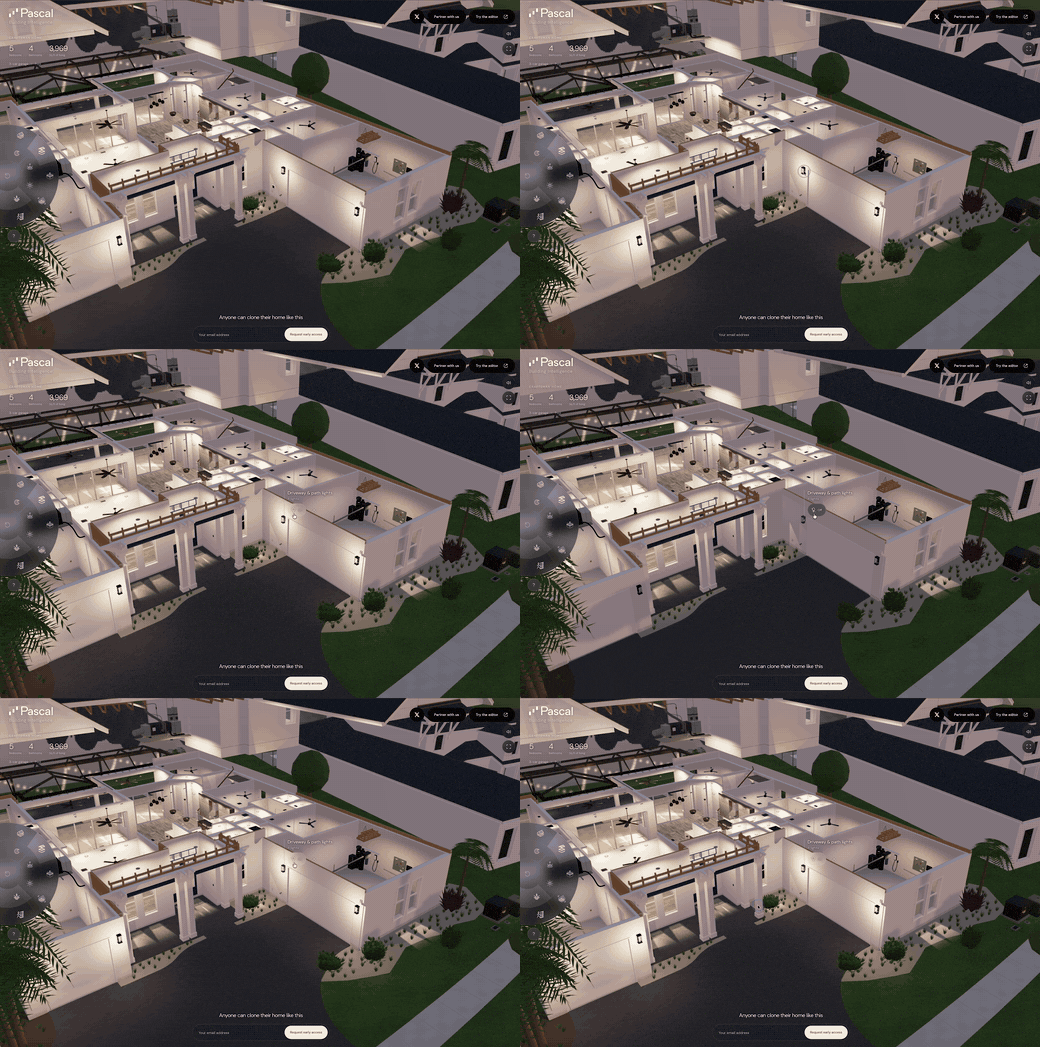
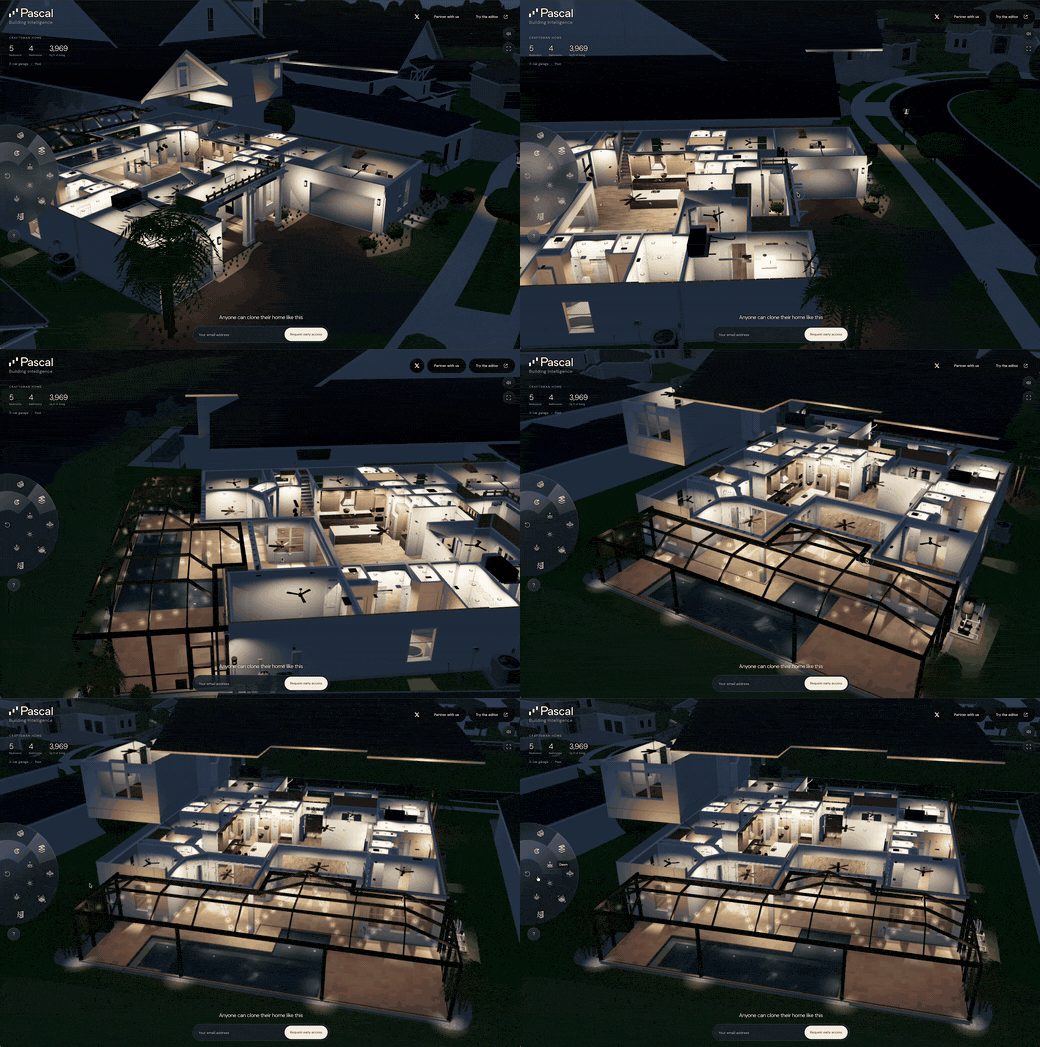
Explore the live demo — a real home reconstructed in detail, from its rooms and finishes to the structure and systems behind the walls. This hosted preview explores the direction of the next Pascal editor; the experience shown here is not yet part of the open-source editor release.
| Exploded view — see how the home fits together | Cut view — slice through the building |
|---|---|
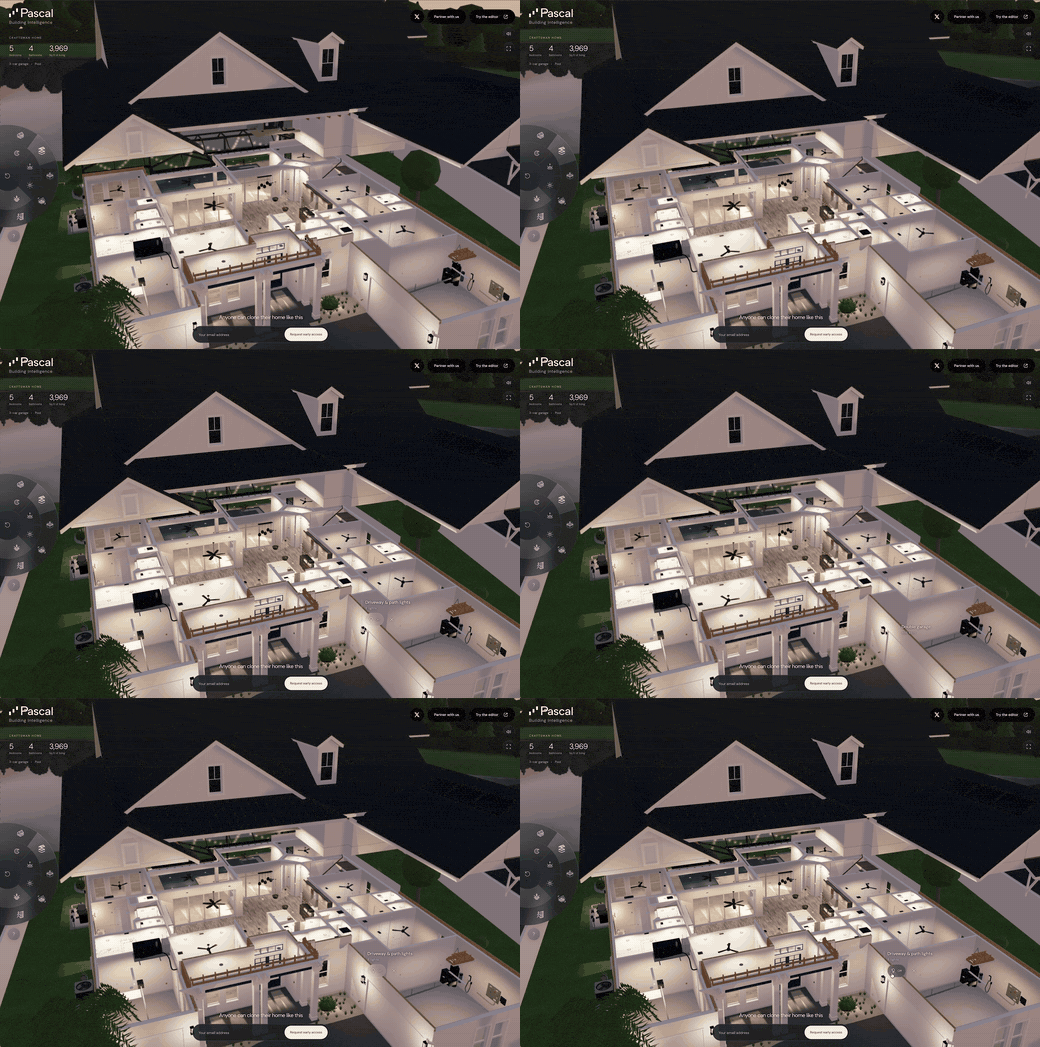 | 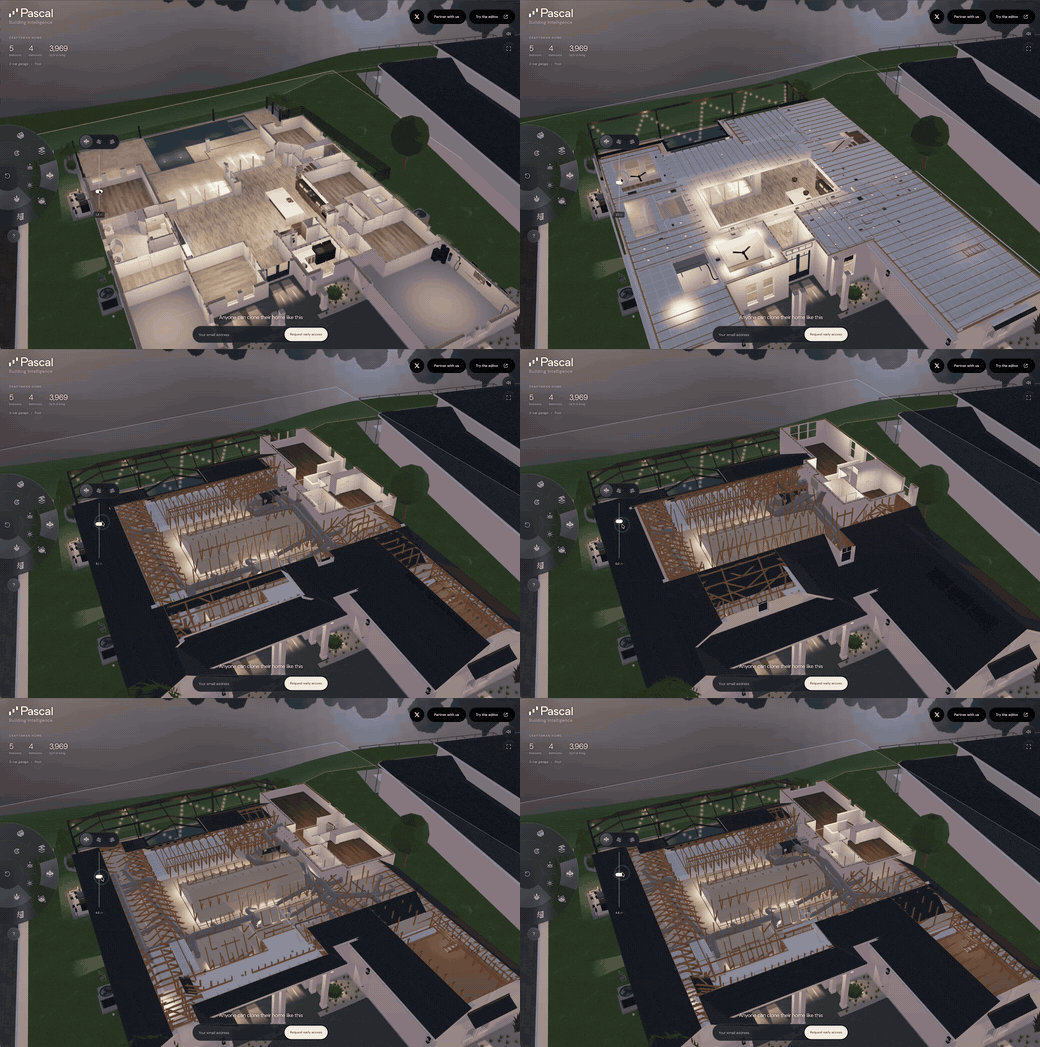 |
| X-ray — reveal the modeled systems | Walkthrough — step inside at eye level |
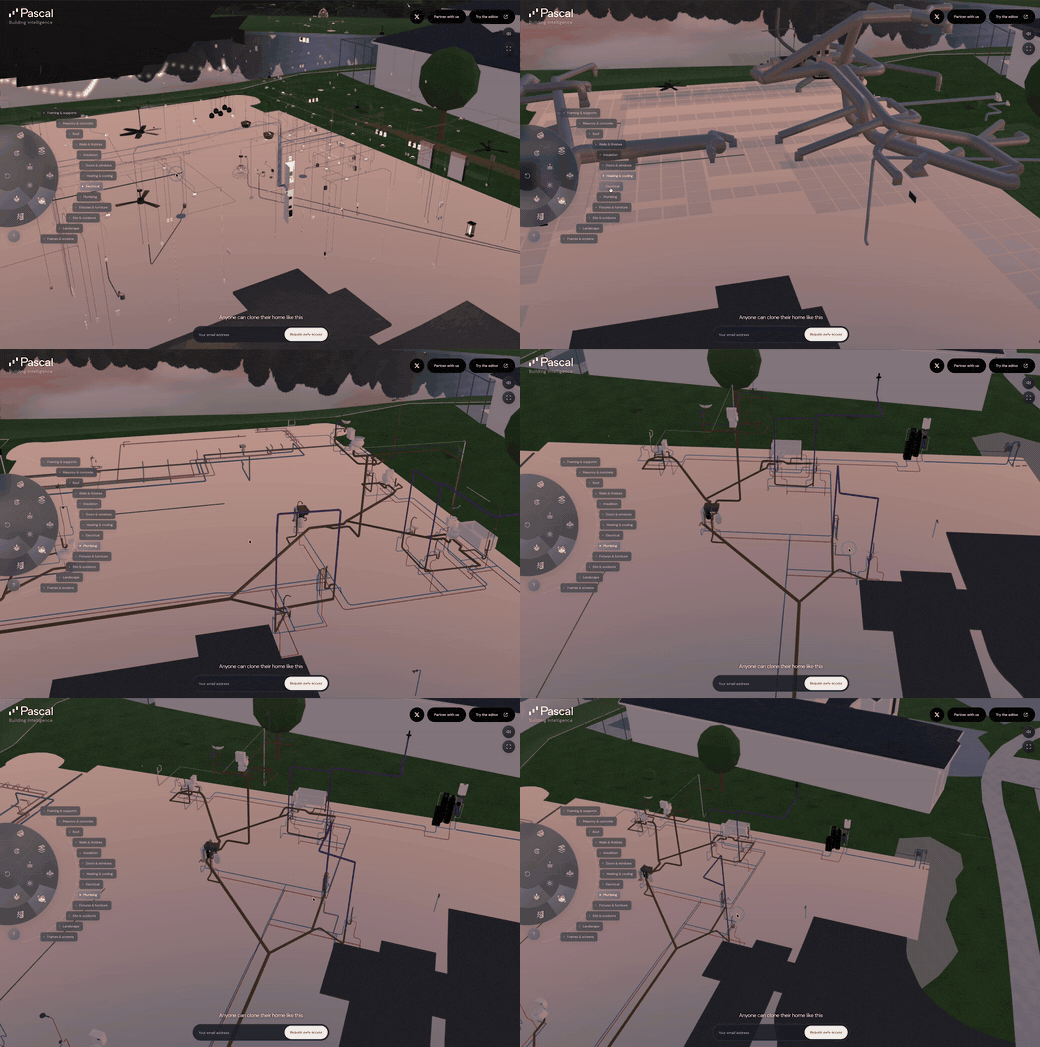 | 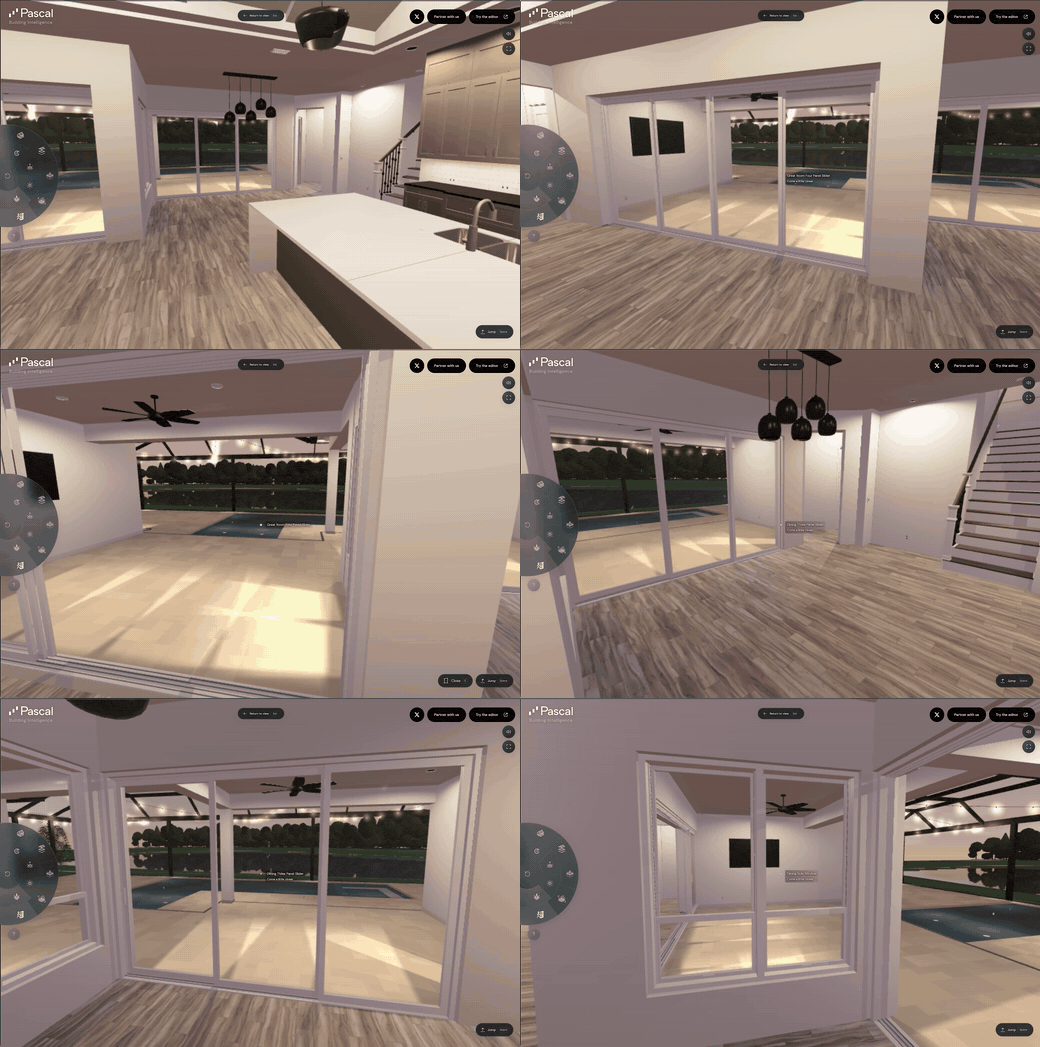 |
| Interactions — open doors and explore | Environment — change the light and atmosphere |
 |  |
We are exploring what this could make possible for facility management, home services, architecture, home building, and infrastructure. Join the discussion on X and tell us where you would use it.
Make something with these videos
Making a video, tutorial, article, or social post about Pascal? You are welcome to use and edit this footage, including in monetized content, under CC BY 4.0. Credit Pascal, link the license, and note your edits; no separate permission is needed.
Download the six original videos and see the creator guide.
Run the Editor Locally
Node.js 22.13 or newer can create a persistent local Pascal installation without cloning this repository:
npx @pascal-app/cli editor
The CLI starts the editor and an authenticated MCP service in the background, selects
collision-free loopback ports, and keeps projects in ~/.pascal/data/pascal.db. The npm
package holds the CLI and that MCP service; the web editor runtime is downloaded once per
version on the first command that starts the editor and verified against a digest published
inside the package. Configure an agent to launch pascal mcp connect, which needs neither
the editor process nor that download. Install the pascal command with
npm install --global @pascal-app/cli. See Run Pascal locally
for pnpm/Bun commands, project management, MCP setup, updates, storage paths, and
troubleshooting.
Use one active agent client per local CLI service. The standalone local HTTP runtime shares active scene state between clients; use separate PASCAL_HOME directories and service processes when independent concurrent work is required.
Agent skills
Install Pascal's public agent workflows from this repository with skills.sh:
npx skills add pascalorg/editor \
  --skill pascal-3d \
  --skill furniture-fit
Claude Code users can install the same canonical skill source as a plugin:
/plugin marketplace add pascalorg/editor
/plugin install pascal-agent-skills@pascal
The Claude plugin also supplies the local pascal mcp connect server. Install and start the Pascal CLI first, and keep pascal on the PATH used to launch Claude Code. This local connector needs no Pascal account or API key and does not upload projects automatically. Its plugin root is this repository's skills/ directory, so an install copies only the skill bundles and their plugin metadata rather than the repository.
The plugin bundles two servers: the local pascal connector above and a hosted pascal-hosted server for https://editor.pascal.app/api/mcp, which prompts for an optional Pascal API key at enable time and stores it in the OS keychain. Leave the key empty to run local-only.
Claude Code 2.1.258 loads both the user-scoped pascal server created by pascal mcp setup claude and the plugin-provided server. Remove the manual entry before reloading or restarting Claude Code so only the plugin owns the connection lifecycle:
claude mcp remove --scope user pascal
Use /mcp to remove or disable any project- or local-scoped Pascal connection too. Leaving both connections active violates the one-active-agent-client-per-local-service requirement. When the intended project is hosted in a Pascal account or organization, disable the plugin-provided local server in /mcp and configure the hosted endpoint from the skill setup guide instead.
Codex users can install the same plugin from the repository marketplace:
codex plugin marketplace add pascalorg/editor
codex plugin add pascal-agent-skills@pascal
OpenClaw installation becomes available after the skills are published under Pascal's ClawHub publisher. See skills/README.md for the owner-qualified install and verification commands.
pascal-3d covers safe local or hosted MCP setup and verified scene work. furniture-fit produces a bounded, evidence-based footprint assessment without claiming unsupported height, swing, or delivery checks. See skills/README.md for package details and validation.
The skills inspect the connected MCP tool schemas before using optional fields. A capability present in this repository may be absent from an older installed or hosted release; the agent should report the narrower supported result instead of assuming source-only inputs are available.
These workflows require a connected Pascal MCP server for their tool-backed actions. An OpenAI directory submission must therefore use With MCP and submit the production hosted MCP endpoint together with the skills. The repository package does not prove that the endpoint, OAuth flow, reviewer credentials, domain verification, or portal scan is ready for review.
MCP Registry
server.json is Pascal's manifest for the official MCP Registry. Its
version tracks the hosted MCP implementation independently of the npm package version.
Pull requests validate the manifest and production endpoint. A Pascal organization
owner publishes an approved version from main with the official registry publisher.
Using Published Packages
The viewer runtime and built-in node definitions are separate packages. Install the full built-in
viewer set, then load the built-in plugin once before mounting <Viewer>. Capture sessions are an
optional extension shipped inside those packages as the @pascal-app/core/capture and
@pascal-app/viewer/capture subpaths:
npm install @pascal-app/core @pascal-app/viewer @pascal-app/editor @pascal-app/nodes
import { loadPlugin } from '@pascal-app/core'
import { builtinPlugin } from '@pascal-app/nodes'

await loadPlugin(builtinPlugin)
See the @pascal-app/viewer quick start for a React example.
Repository Architecture
This is a Turborepo monorepo with the reusable editor packages, the standalone app, and the CLI that distributes it:
editor/
├── apps/
│   └── editor/          # Next.js application
├── packages/
│   ├── core/            # Schemas, scene state, registry contracts, capture contracts
│   ├── viewer/          # 3D rendering runtime, shared systems, capture runtime
│   ├── editor/          # Editing tools and UI components
│   ├── nodes/           # Built-in node definitions, renderers, and systems
│   ├── cli/             # Persistent local editor installer and process manager
│   ├── mcp/             # Model Context Protocol server and scene storage
│   └── ui/              # Shared UI components
Separation of Concerns
| Package | Responsibility |
|---|---|
| @pascal-app/core | Node schemas, scene state (Zustand), registry contracts, spatial queries, and event bus. core/capture adds versioned capture manifests, normalized streams, and transport-neutral static/live sources |
| @pascal-app/viewer | 3D rendering via React Three Fiber, shared render systems, default camera/controls, and post-processing. viewer/capture adds the capture runtime and reference model, device-motion, point-cloud, and surface-mesh layers |
| @pascal-app/editor | Editing tools, panels, selection, and direct-manipulation UI |
| @pascal-app/nodes | Built-in registry plugin with node definitions, renderers, geometry, and systems |
| @pascal-app/cli | Installs and manages a versioned standalone editor runtime and persistent local data |
| @pascal-app/mcp | Exposes scene tools, resources, prompts, and local storage to MCP-compatible AI hosts |
| apps/editor | Standalone Next.js host for the editor packages |
The viewer renders the scene with sensible defaults. The editor extends it with interactive tools, selection management, and editing capabilities.
Stores
Each package has its own Zustand store for managing state:
| Store | Package | Responsibility |
|---|---|---|
useScene | @pascal-app/core | Scene data: nodes, root IDs, dirty nodes, CRUD operations. Persisted to IndexedDB with undo/redo via Zundo. |
useViewer | @pascal-app/viewer | Viewer state: current selection (building/level/zone IDs), level display mode (stacked/exploded/solo), camera mode. |
useEditor | apps/editor | Editor state: active tool, structure layer visibility, panel states, editor-specific preferences. |
Access patterns:
// Subscribe to state changes (React component)
const nodes = useScene((state) => state.nodes)
const levelId = useViewer((state) => state.selection.levelId)
const activeTool = useEditor((state) => state.tool)

// Access state outside React (callbacks, systems)
const node = useScene.getState().nodes[id]
useViewer.getState().setSelection({ levelId: 'level_123' })
Core Concepts
Nodes
Nodes are the data primitives that describe the 3D scene. All nodes extend BaseNode:
File tree
Showing a partial view of a very large repo.
FAQ
editor is a Claude Code plugin with 2 hand-picked skills for design work, indexed on Flowy. Install it with the command on its page. It includes furniture-fit, pascal-3d. Its skills do not fire on their own yet. Request auto-invocation to have Flowy route them as you prompt. Free and open source.
- What is editor?
- An open-source, local-first 3D building editor built with React Three Fiber and WebGPU. Run it in the browser or from the CLI, and connect AI agents through MCP.
- How do I install editor?
- Run these in Claude Code: /plugin marketplace add pascalorg/editor then /plugin install pascal-agent-skills@pascal. Then prompt normally.
- Does editor auto-invoke its skills?
- Not yet. It is indexed on Flowy as a plain plugin. Request auto-invocation on its page and Flowy will route its skills for you as you prompt.
- Is editor free?
- Yes. Flowy is free and open source, with nothing gated. You can read every skill in full before you install.
Is this plugin yours?
Claim it with GitHubSubmit a pluginPromote it